
Musicians and acrobats in large numbers have turned the avenues of central Mexico City into a carnival.
This parade serves as a prelude to the Day of the Dead celebrations, “Dia de los Muertos,” the most popular festival in Mexico. A blend of pre-Hispanic rites and Christian celebrations, it takes place on November 1 and 2, coinciding with the Catholic All Saints’ Day followed by the day of remembrance for the deceased for the faithful.
It is an occasion for people to “bring the dead back,” covering them with offerings in the form of flowers and food and parading their skeletal remains through the streets.
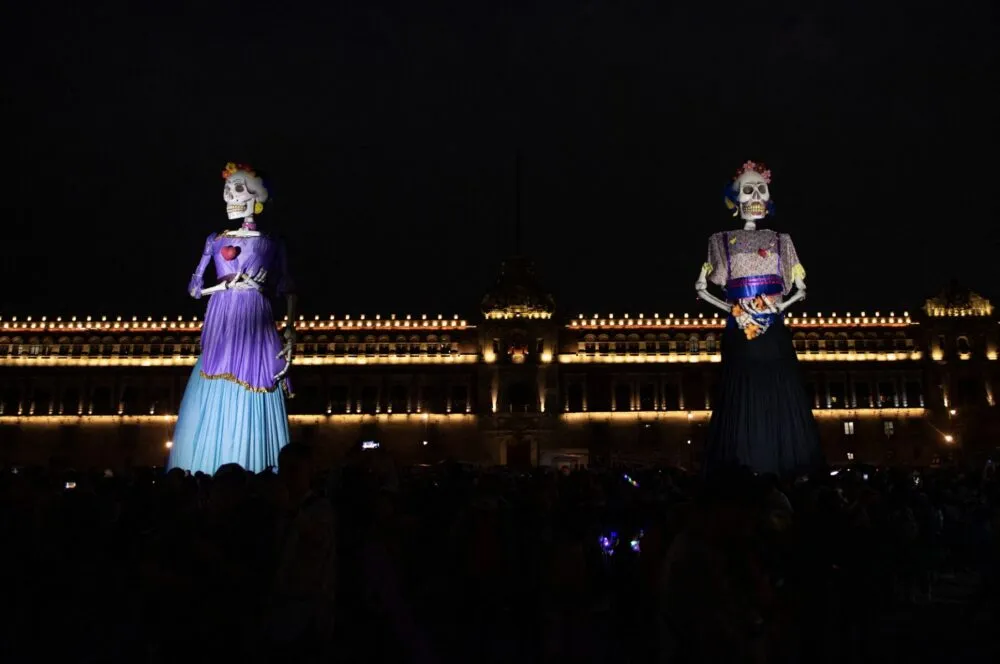
But Sam Mendes’s “Spectre” (2015) changed the tradition. The film opens with the British spy, played by Daniel Craig, walking amid a crowd dressed in death costumes and other giant skeletons in the center of Mexico City.
“Everyone started asking me: when does the parade take place?” said to AFP Miguel Angel Mancera, the mayor from 2012 to 2018 and the first to organize it. “It has been an adventure.”
The capital’s government hopes that this year more than half a million national and foreign tourists will enjoy this iconic parade. The parade also coincides with the Formula 1 Grand Prix weekend in the city.
Some of the monumental figures used during filming were reused for the inaugural edition of the parade in 2016. “Now, it’s become something really, really big (…) it’s something I’m truly very proud of,” added the mayor.
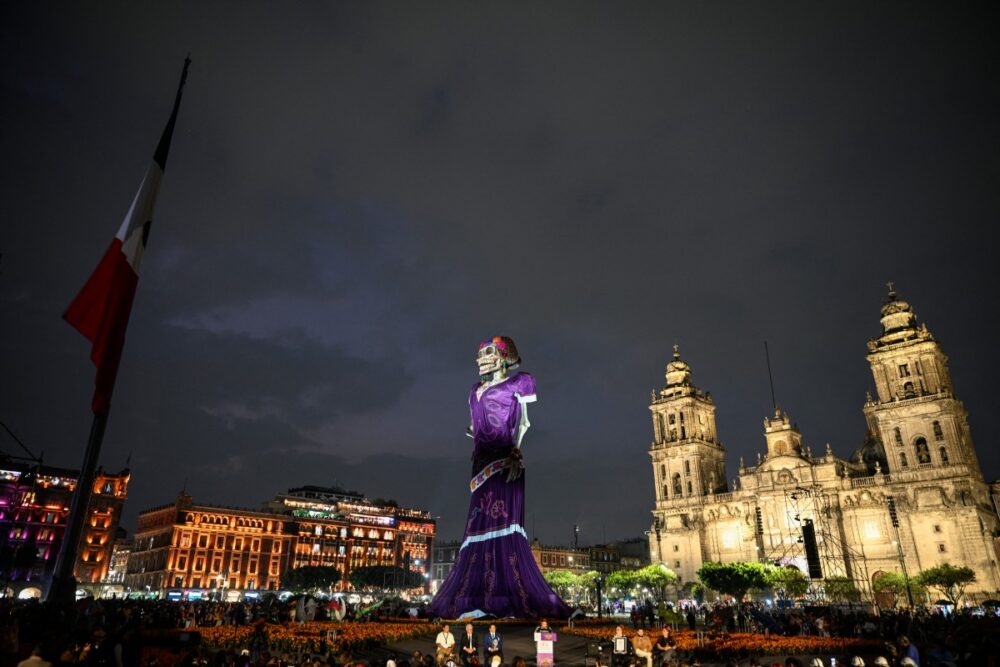
The 2026 edition is highlighted by the presence of a colossal Catrina – a richly dressed female skeleton – eleven stories tall – erected at Constitution Square (the Zócalo), the main square of Mexico City.
From a celebration that was once more intimate, we have today shifted to a massive event, analyzes Roberto Montalvo, a scholar at Universidad Iberoamericana.
Today, the crowds of tourists overwhelm some cemeteries and encroach on families’ private space. “Will we adapt the visit to the ritual, or will the ritual adapt to the visitor?” wonders the expert.