
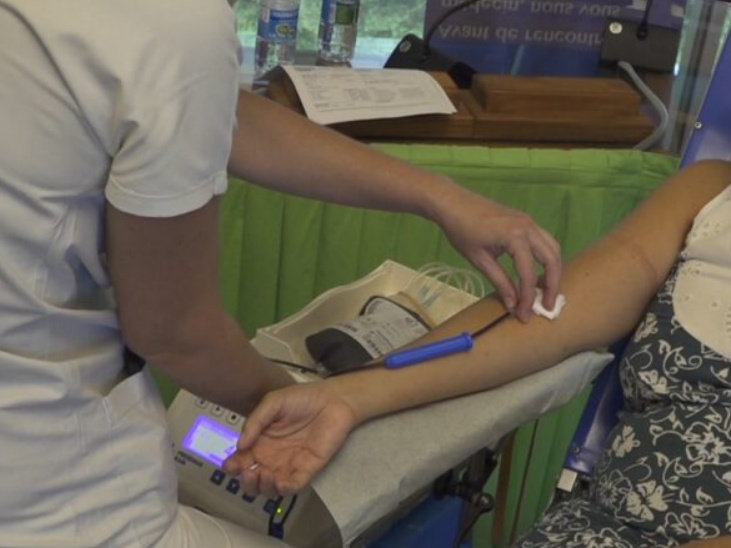
In a note addressed to physicians, Jehovah’s Witnesses explained that, in September, it is up to every Witness to decide for themselves whether to accept or reject transfusions of red blood cells, white blood cells, plasma, or platelets derived from someone else’s blood.
But in line with the biblical command to abstain from blood, their refusal of whole-blood transfusions remains unchanged, the text posted on their website adds.
This marks a major softening, since blood transfusion has long been treated by Jehovah’s Witnesses as a prohibition that could, in principle, lead to excommunication.
The shift had begun in March, when the Governing Body of Jehovah’s Witnesses said that it is up to each Christian to decide how their own blood will be used in medical treatment or surgery, according to a separate statement.
In September, the Governing Body went further, asserting that the individual believer should decide whether he will accept components or fractions derived from another person’s blood.
The new principles apply to the four main components of blood—the red cells, white cells, plasma, and platelets.
The movement’s leadership notes that, due to advances in medicine, many questions arise about applying biblical principles in particular cases.
And the Bible does not specify what we may or may not do with our own blood in the context of treatment or surgery, the movement adds, leaving the decision to the discernment of its roughly 8.5 million adherents worldwide.
While refusing bloodless meat and blood transfusions, the movement nevertheless established a mediation framework to promote alternative medical solutions.
Founded in 1870 in Pennsylvania, United States, by Charles Taze Russell, this movement on the fringe of the evangelical spectrum claims the Christian faith.
Known for their missionary zeal and door-to-door ministry, Jehovah’s Witnesses are regularly accused of sectarian excesses due to their stringent rules, even as in France this religious organization has gained tax relief and the accreditation of prison chaplains.