
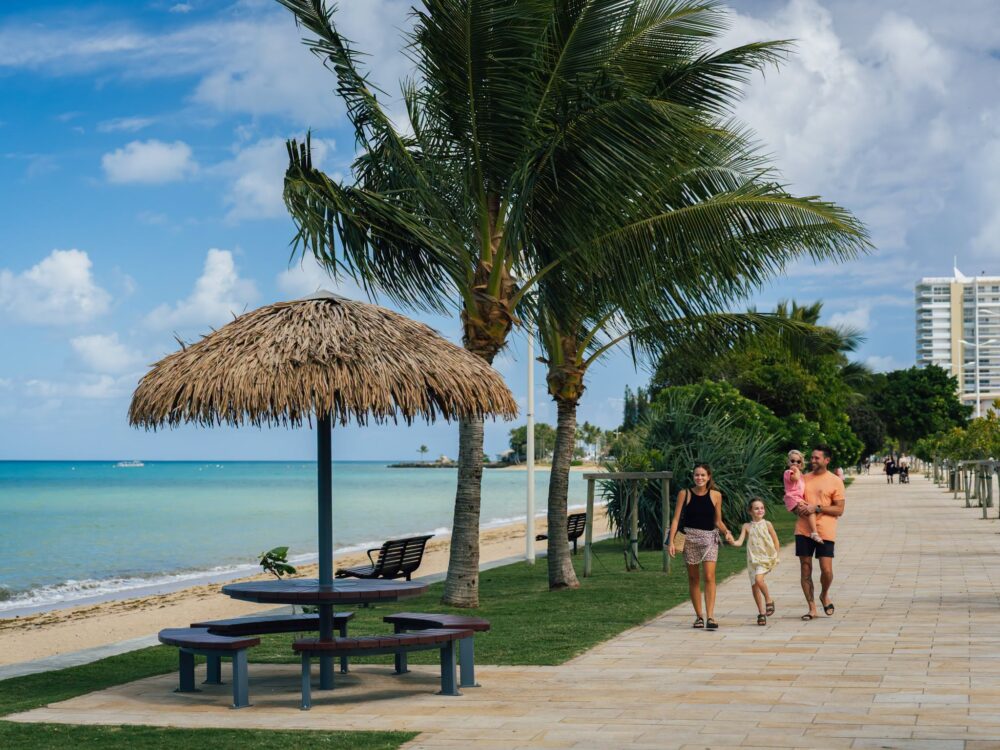
The archipelago, which, according to the 2025 census, has about 265,000 inhabitants, has lost 7,000 people between 2019 and 2025 and is struggling to recover from the violence of 2024, which led to the disappearance of 13,500 jobs, according to the Institute of Statistics and Economic Studies (Insee). Social accounts, in particular, are in the red.
In this context, the government of New Caledonia on Monday examined a draft law proposing to exempt from income tax, for 15 years, retirement pensions and income from wealth from foreign sources of new residents aged 62 and over.
They must notably hold 30 million Pacific francs (about €251,400) in bank assets, reside on the territory for at least 183 days per year, and benefit from external social coverage. They will be able to purchase real estate only in new developments and will not be allowed to pursue any professional activity.
“The aim is to have people who are capable of investing and consuming,” explained on Monday Christopher Gygès, the government spokesperson and the economy official, who estimates the arrival of 500 to 1,000 people in the first two to three years.
The five independentist members of the government opposed the measure, which still has to be submitted to Congress after review by the Council of State.
“Why grant such tax advantages to newcomers without addressing the inequalities with those who already live here?”, reacted on Tuesday Johanito Wamytan, independentist member of the executive, who also fears the impact of the scheme on housing prices.
This is the second time in a few days that the question of attractiveness, a highly sensitive issue in the archipelago, has entered public debate.
Change Your Life, Not Your Country
Since November 18, the Southern Province, led by non-independence supporters, has been promoting its charms on 300 posters in the Paris metro.
On one of the posters of this campaign, titled “Change Your Life, Not Your Country,” a motorist stuck in Parisian traffic shares space with a herd of cattle guided by riders: “In New Caledonia, rush hour also gets jammed,” the slogan jokes.
But in the archipelago, listed on the United Nations’ list of non-self-governing territories, demographic questions are highly political.
In 1972, a circular from Prime Minister Pierre Messmer explicitly recommended settling external populations in New Caledonia to counter independence claims.
The Matignon (1988) and Nouméa (1998) accords subsequently established restrictions on the electoral roll for certain elections, notably to ensure that newcomers could not determine the territory’s institutional future. Reconsideration of these restrictions sparked the violence in May 2024.
The President of the Southern Province, Sonia Backès, rejects any logic of a “settler colony”: it is necessary to “bring in people for the survival of New Caledonia,” she argued on her Facebook page.
Independentist lawmakers of the Southern Province have, for their part, called for suspending the advertising campaign until the archipelago’s institutional future is stabilized.
They advocate encouraging the return of Califers who left to live elsewhere and reforming the financing of social security systems.