
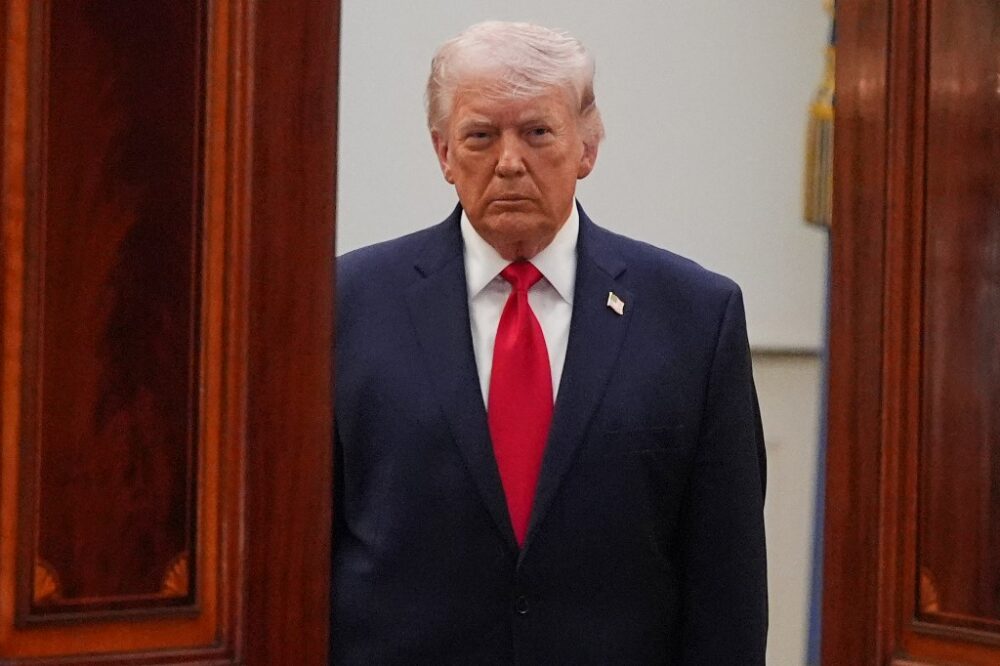
“We can do this in ten minutes”, announced the American president, who last week had not ruled out “another small ‘Epic Fury’” referring to the name given to the military offensive launched on February 28 by Washington against the Islamic Republic.
Tehran replied that this time Donald Trump “would not be able to dictate either the timing or the terms” of an end to hostilities. “A new war could be longer than the previous one”, said the army spokesman, Mohammad Akraminia.
He was referring to the most intense phase of the conflict, which claimed the lives of many Iranian officials—including the Supreme Leader Ali Khamenei—and caused thousands of civilian deaths during nearly forty days of Israeli-American bombardments.
An April ceasefire there brought an end to it, followed by a June protocol of agreement, but the fragile understanding fell apart this summer and exchanges of strikes resumed, Iran responding by targeting Washington’s regional allies once again, from the Gulf to Jordan.
If a lull has been observed since early September, press reports have hinted at a possible short and intense military campaign after the U.S. midterm elections scheduled for Tuesday.
Mount Kolang
“We have neutralized their nuclear capabilities. There remains, I would say, one or two sites to deal with.” said the American leader to reporters at his Florida residence on Saturday. “You might probably look toward Pickaxe Mountain, and we need to take care of it. We can get all of this done very quickly.”
Situated near Iran’s Natanz uranium enrichment site, about 250 kilometers south of Tehran, Mount Kolang is suspected by U.S. intelligence services of housing an underground nuclear complex. Donald Trump had already threatened to bomb it at the end of July.
The Iranian authorities rejected these allegations, just as they deny seeking to acquire a nuclear weapon, defending their right to civil nuclear energy.
Following this week’s legislative elections in Israel, outgoing Prime Minister Benjamin Netanyahu also spoke of “a unique historic opportunity” to permanently eliminate the existential threat posed by Iran, his sworn foe.
Ready for the Worst
In response to these threats, Supreme Leader Mojtaba Khamenei, who succeeded his father in March, warned on Saturday of “an immediate, powerful and geographically unlimited response.”
The Ayatollah, unseen since his appointment, also ordered military officials to update the target list to include “all types of material and immaterial assets belonging to the enemy American-Israeli.”
Similar warnings were reiterated Sunday by the defense minister and the Revolutionary Guards, the formidable arm of the Islamic Republic.
Iran has already threatened to strike data centers and artificial intelligence systems, as well as submarine cables in the strategic Strait of Hormuz, a focal point of the conflict.
Negotiations are nonetheless underway under the auspices of the Qatari mediator. An Iranian delegation visited Qatar and on Sunday Foreign Minister Abbas Araghchi said he hoped “that the other side would show reason and prefer the diplomatic path to other options.”.
“The Islamic Republic of Iran remains ready to pursue both defense and diplomacy”, he added, as quoted by the official Iranian news agency Irna.
On Saturday, Iran welcomed the “tone change” reflected in a letter from U.S. Vice President JD Vance aimed at restarting negotiations, according to the Wall Street Journal.
The United Arab Emirates also said they hoped for a diplomatic breakthrough. “It is not in the region’s interest to witness a new cycle of confrontation. But as we have shown before, we are also ready to face the worst,” noted Anwar Gargash, the emirate’s diplomatic adviser, at a conference in Manama, the capital of Bahrain.
In the streets of Tehran, Mohadese, a 27-year-old woman employed in the health sector, tries to dispel “negative thoughts” and does not want to “worry constantly about what could happen.”
Ebrahim, meanwhile, remains unmoved: “We do not fear another war, we have been at war for 48 years”, declares this forty-something salesman, referring to the inception of the Islamic Republic in 1979.