
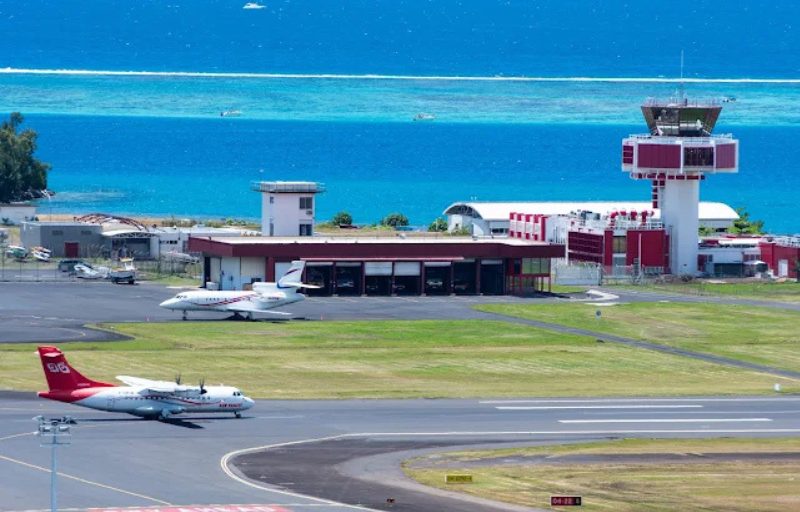
No end of crisis in sight at the airport. Despite a limited turnout among its ranks, Air Tahiti has had to cancel 70 flights since the start of the strike on Thursday. Management nevertheless insists that 93% of passengers reached their destination, sometimes with the help of competing air or maritime operators. On the Somstat side, mobilization is much broader, but carriers, whether domestic or international, report normal fueling of their aircraft. It remains to be seen how long non-striking workers can keep this pace.
Lire aussi : Aviation strike: traffic barely disrupted, but the movement could last
No official discussions, no protocol signing in sight, neither for Somstat nor for Air Tahiti this Monday. On the side of the historic domestic carrier, informal meetings have taken place but no progress toward real negotiations. The CSIP, O oe to oe rima, and the flight crew union continue to mobilize around fifty pistards, PNC and maintenance staff, out of the operator’s 1,600 employees.
One flight in three canceled on average
Enough to notably disrupt traffic since Thursday. Over five days, on average one in three flights has been canceled, and up to 50% of the program was suspended this Monday. In other words, 70 segments were affected out of the 192 initially planned. The affected passengers, meanwhile, continue to be rebooked on Air Moana, Air Tetiaroa, the Apetahi Express or the Vaearai. Still, to date, 7% of the passengers to be carried since the start of the movement remain awaiting a re-routing solution. School charters, however, were all able to depart to bring the 820 students home. Unsurprisingly, unions and management blame each other for the stalemate in discussions. A protocol proposal had been tabled by Air Tahiti which, amid the company’s and sector’s significant financial difficulties, excluded the most financially burdensome demands of the strikers.
Service maintained at Somstat… But for how long?
On the Somstat side, the “minimum service that does its utmost” announced by management seems to be working. Airlines, both local and international, say they have not suffered any disruption to their fuel supply since Thursday’s strike. Air Tahiti links all disruptions to its own movement, and Raitini Rey, deputy general manager of Air Moana, assures that there is “no impact at the level of operations” and that “refueling is stable, ongoing”.
Yet, according to CSIP, out of the nineteen employees of the company owned by the three local petroleum importers, about fifteen have stopped work, i.e., are on strike. The remaining staff apparently suffices, in the reduced flight schedule due to Air Tahiti’s strike, to refuel on time. But for how much longer? The unions’ objective is clear: to wait until non-striking staff are forced to take time off to weigh on activity.