
While armed conflicts and violence remain the main drivers of acute food insecurity worldwide, extreme climate events, notably El Niño, constitute another contributing factor, according to the joint report by the United Nations Food and Agriculture Organization (FAO) and the World Food Programme (WFP).
In their early warning for 16 ‘hunger hotspots’ between December and May 2027, the two Rome-based agencies named Sudan, South Sudan, Somalia, the northern part of Nigeria, and Yemen as the most concerning zones.
According to the report, famine remains a ‘plausible’ risk in parts of Sudan, notably in North Darfur, and in South Sudan.
“We have published ten editions of this report. What we find is that the same countries keep appearing among those with the greatest concern (…) South Sudan has been flagged in all ten editions, Sudan in eight, and Nigeria, Somalia, and Yemen in five or six,” commented at a Geneva briefing by Jean-Martin Bauer, director of food security analysis at WFP.
Alarming Levels of Displacement
The risk of worsening hunger sits against a backdrop of a surge in “episodes of political violence” worldwide, up more than 15% compared with the same period last year, which has led to “alarming levels of displacement in recent months,” the report notes, particularly in South Sudan and Yemen.
In the five most at-risk countries, “resources allocated to food assistance and nutrition programs (…) have fallen by 62% since 2022, from $5 billion in 2022 to $2 billion last year”, Mr. Bauer said.
“While conflicts, economic shocks, extreme climate events and constraints on access remained the main drivers behind these crises, the decline in humanitarian funding has reduced the ability to sustain the progress achieved and to mitigate the worsening situation,” the report notes.
While past humanitarian aid helped avert the worst-case scenarios, “progress has proven fragile and short-lived: the risks of severe acute food insecurity— including the risk of famine—reappeared after a few years,” FAO and WFP lamented.
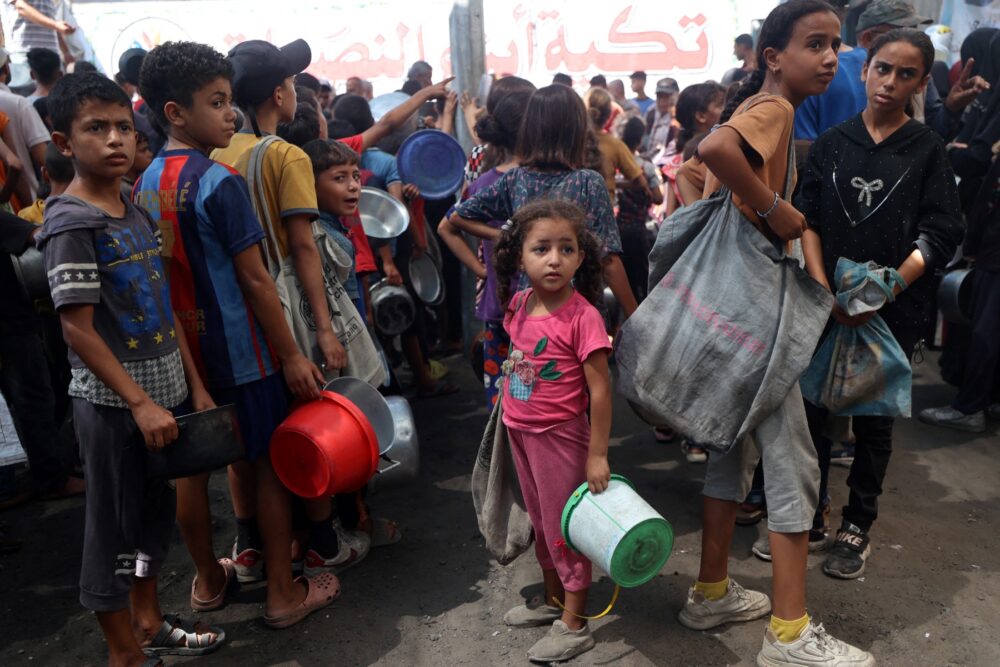
Also listed as ‘highly concerning’ are Afghanistan, the Democratic Republic of Congo— which is also grappling with an Ebola outbreak—, Palestine, and Haiti, where rising gang violence has displaced 1.5 million people and hindered access to humanitarian aid.
New regions have been added to the list: Chad, Uganda, Southern Africa, and the “Central American Dry Corridor,” a dry tropical forest stretching from Guatemala to Costa Rica; the latter two regions are expected to suffer El Niño effects, which will have negative impacts on crops.
The list also includes Mali, Myanmar, and Madagascar.
Too Much or Too Little Rainfall
“In the most alarming hotspots”, targeted humanitarian action “is crucial to prevent famine and loss of life”, the report states.
“Fully funded aid can buy us time and make a difference,” said Jean-Martin Bauer, but there must also be “safe access and diplomatic support to end the conflicts that lie at the heart of much of the hunger highlighted in this report.”
El Niño also has major negative repercussions in certain regions.
This climatic phenomenon recurs roughly every two to seven years and warms the Pacific waters starting in spring, leading in the following months to significant shifts in wind patterns, pressure, and precipitation on a global scale.
According to the report’s estimates, about 49 million additional people could face acute food insecurity by the end of 2027 due to an exceptionally intense El Niño this year, which is expected to extend into next spring.
“Droughts and higher temperatures linked to El Niño have already contributed to crop losses in the Central American Dry Corridor and the Horn of Africa, while threatening the next planting season in Southern Africa,” the report notes.
In the Gaza Strip, moreover, “winter rains and localized floods could worsen the plight of displaced families,” the report states.
Preventive measures, such as using seeds suited to local conditions, better protection of livestock, and safeguarding water resources, combined with timely aid, can make the difference.
But a plan drawn up by FAO and WFP faces a funding shortfall of $125 million, according to the agencies.