
It all began in 2009 when Manoa Duwai persuaded the villagers to establish a protected zone within their usual fishing grounds along the coast of this Pacific island state, concerned by the dwindling numbers of fish he was catching and their small size.
“Imagine what it will be like in 10, 15, 20 years,” Mr. Duwai says after a fishing trip that yielded only a few tiny juvenile fish. “What species will remain in our usual fishing area? We have to do something.”.
He then approached the village elders with a proposal to safeguard a portion of their fishing zone. To begin, a patch measuring 30 meters by 40 meters inside the reef.
The project did not take long to bear fruit: larger fish sought shelter in the protected area, and then dispersed into neighboring waters.
Taboo Zone
Over time, the village enlarged the protected zone to 280 by 240 meters, flanked by a similarly sized area they now refer to as “the fridge,” kept temporarily closed to rebuild the fish stocks.
Mr. Duwai’s vision, that of a thriving marine habitat capable of sustaining his village of 147 residents, earned praise worldwide, with scholars and charitable organizations from all over coming to learn from his ideas.
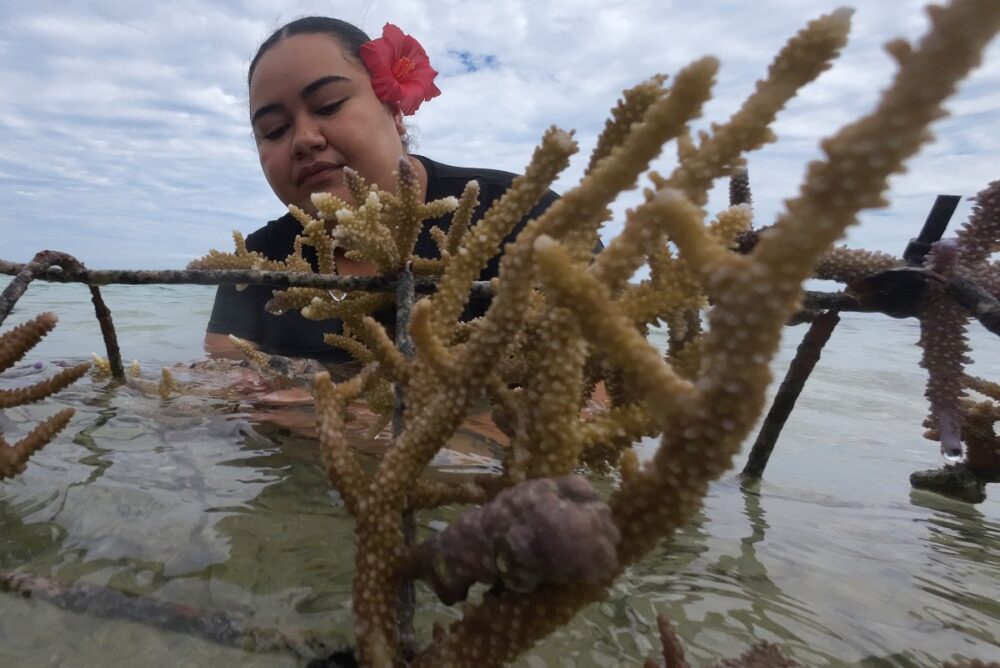
In 2011, a group of Naidiri youths was formed to manage what they call the “taboo zone,” and they are the ones who work to restore corals and promote a healthy ecosystem. In 2023 alone, they restored 18,000 corals and 10,000 mangroves.
“When we started, we were little kids,” recounts Joseva Kunagado, 21, who leads this team, to AFP. “We used to take barrels, cut them in half, tie a rope to them, and drag. We would have to walk perhaps 20 minutes to fetch corals, return, and plant them.”, he says. Today, he asserts, “we are very happy with the work done, because we’ve seen big changes.”
The protected area that Kunagado and his friends have developed overflows with corals and now hosts hundreds of “super corals” that resist heat, which could shield the village from the impacts of rising water temperatures. Sharks have started returning to the protected zone.
“When it started to come back, different types of fish, invertebrates, everything returned, I was the happiest person in the village,” says Mr. Duwai.
Super Corals
Mr. Kunagado recalls seeing sharks on the morning of the AFP visit. And “we did not expect… to see tourists, researchers, university students coming,” he says, “so we are proud of this work.”
Researchers are interested not only in how Naidiri protected its marine ecosystem, but also in the corals that demonstrate extraordinary heat resistance.
During a heatwave earlier this year, Mr. Duwai recalls, the water temperature surged to as high as 39°C, and thousands of corals planted suffered widespread bleaching.
At such temperatures, most corals would have died, he says, but 20% survived: the “super corals.”
“The only corals we have here now are the ones that survived these 38, 39-degree temperatures,” he notes.
Now, he emphasizes, Naidiri is transplanting its heat-tolerant corals to deeper, cooler waters near Suva, the capital, to better protect them against future heatwaves.