
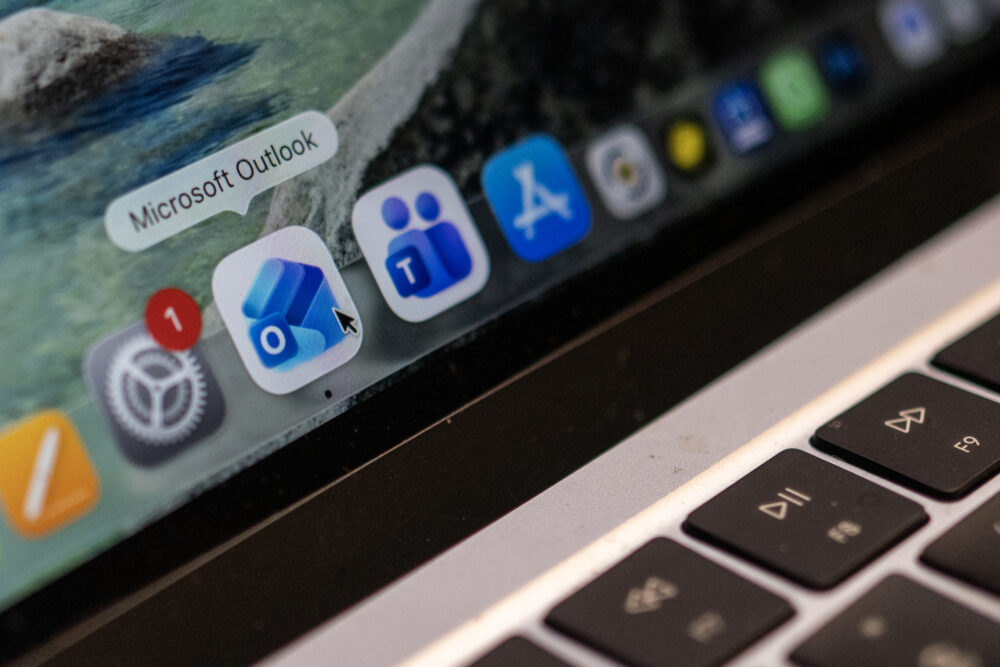
The outages, which began due to a “high load” on the group’s infrastructure, affect its Outlook email service, as well as its Teams collaboration platform and its Copilot AI assistant, according to the American tech giant.
It reported on Friday afternoon of “continuous progress” in restoring its services, with “improvements” in North America and “in a large part of Europe,” as well as encouraging signs of recovery in the Asia-Pacific region.
Although the service “continues to improve,” some users may still experience intermittent connectivity issues or delays in receiving emails, the company noted.
At this stage, “we have no evidence of malicious activity linked to this incident,” the company once again assured, promising to shed light on the causes of this major problem. “We will continue to handle this situation with urgency until its full resolution,” it added.
“Serious Repercussions”
In July 2024, another IT outage, tied to an update of CrowdStrike software on Windows, had paralyzed airports, hospitals, and many other organizations, causing enormous disruption worldwide.
This new disruption spread worldwide within an hour on Thursday, rendering the company’s products unusable across dozens of countries and territories, according to Downdetector, a fault-tracking site.
Among the affected countries, New Zealand issued a notice indicating that its “capacity to receive emails had been affected by Microsoft’s global outage,” also impacting “all New Zealand embassies, consulates and representations worldwide.”
Japan’s Economy Minister Ryosei Akazawa predicted that this outage would have “a significant impact” due to the large number of people using the affected Microsoft software, in an interview with Asahi Shimbun.
The outage has had “grave repercussions” on Britain’s health services, said Rachel Harrison, head of public services at the GMB union, noting however that “emergency interventions” seemed to be “spared.”
The consequences affect both “ambulance services and NHS organizations,” the UK health service, she explained in a statement to AFP.
“Staff in the 111 (medical advice and guidance) and 999 (emergency calls) telephone services cannot relay patient information as they normally would, which leads to a substantial backlog of work waiting and risks causing chaos,” the unionist said.
“A Free Friday”
Business operations were also hampered. In India, airlines warned that customer requests might not reach them.
The stock exchange operator Euronext urged listed companies on its markets to contact it by phone rather than by email if needed, while assuring that its operations were running smoothly.
“One of the major issues is the unavailability of Copilot, we are aware of our dependence on this tool,” a London-based auditor, Yashmit Sharma, 26, told AFP.
But while “on the surface, one might seem a bit sad,” deep down “it does not bother us much. It’s almost like we’re getting a free Friday.”
In Italy, consumer protection group Codacons said it would consider taking legal action if Outlook refused “automatic compensation for citizens and businesses” affected by the disruptions.
“The company cannot simply restore its systems and treat the problem as resolved: it must take responsibility for the consequences for its customers,” the group stated, noting that “even a few hours of interruption” could lead to delivery delays, customer service issues, and lost sales opportunities.