
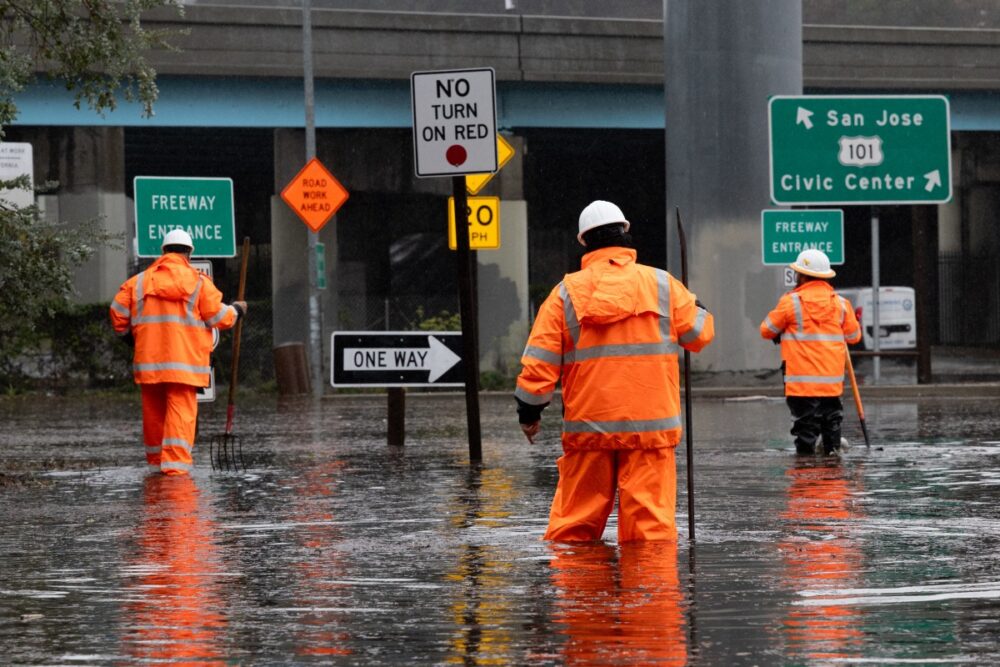
A downpour of torrential rain swept across Los Angeles Thursday morning, triggering flash floods on numerous streets across the city.
Near Burbank Airport, north of the metropolis, firefighters had to rescue a motorist trapped as water rose and submerged his vehicle.
On social media, residents shared numerous images of cars crossing intersections submerged in water, up to the threshold of their doors.
The North Hollywood neighborhood, in the mountains north of Los Angeles, was hit particularly hard.
Similar scenes unfolded the day before in San Francisco, where footage of robotaxis and delivery vehicles plowing through torrents of water circulated on social networks.
Downtown San Francisco recorded 2.64 inches (nearly 7 cm) of rain on Wednesday, according to the US Weather Service (NWS).
The hourly rainfall rate over the city reached a level that has occurred fewer than ten times since the 1980s, according to Daniel Swain, an extreme-weather researcher at UCLA.
The storm also overwhelmed several highway segments in California, prompting their closure.
In the Los Angeles area, authorities issued alerts urging residents to be prepared to evacuate.
This includes the Pacific Palisades neighborhood, and the cities of Malibu and Altadena, ravaged by fires that killed 31 people in the metropolis in January 2025.
In these zones where the fire has burned vegetation and hardened soils, runoff occurs much more quickly and greatly increases the risk of flash floods.
“Every resident of Los Angeles must take this seriously,” warned Los Angeles Mayor Karen Bass. “We have received a lot of rain in a short period, which will continue to cause flooded roads, downed trees, as well as possible mudslides and debris.”
The weather alert is in effect through the night from Thursday to Friday.
It comes as California fears a particularly powerful El Niño this winter.
Dubbed the “enfant terrible of the Pacific,” this recurring phenomenon amplifies the effects of climate change and increases the likelihood of extreme events.
Another storm is already forecast for next week and could coincide with a period of high tides.
This raises concerns in certain coastal towns like Long Beach, where seaside homes have been seriously damaged by waves in recent weeks.