
Yaël Braun-Pivet, the president of the Assembly, had proposed creating such a body as early as Sunday. After an initial political agreement at the Presidents’ Conference on Tuesday morning, the Law Committee approved the initiative.
Chaired by the Macronist deputy Vincent Caure, it will notably have investigative powers to obtain documents and the ability to hold sworn hearings.
Its primary aim will be to “understand how, in our country, we can, in the future, continue to protest (…) and march through the streets in a peaceful and calming manner, and this without danger”, Mr. Caure said to reporters.
“We are fully in our role of overseeing the government’s actions”, congratulated Mme Braun-Pivet.
She must now notify the Minister of Justice before informing the government of the request. A group president, or the government, can then oppose the inquiry for a short period, which will end on Wednesday at 3:00 p.m.
After this deadline, the commission will be created, and it is planned that three co-rapporteurs will be named in quick succession on Wednesday, or Thursday if talks take longer. Caure urged that one of these crucial posts be allocated to each political bloc in the Assembly (left, center bloc, RN-UDR alliance).
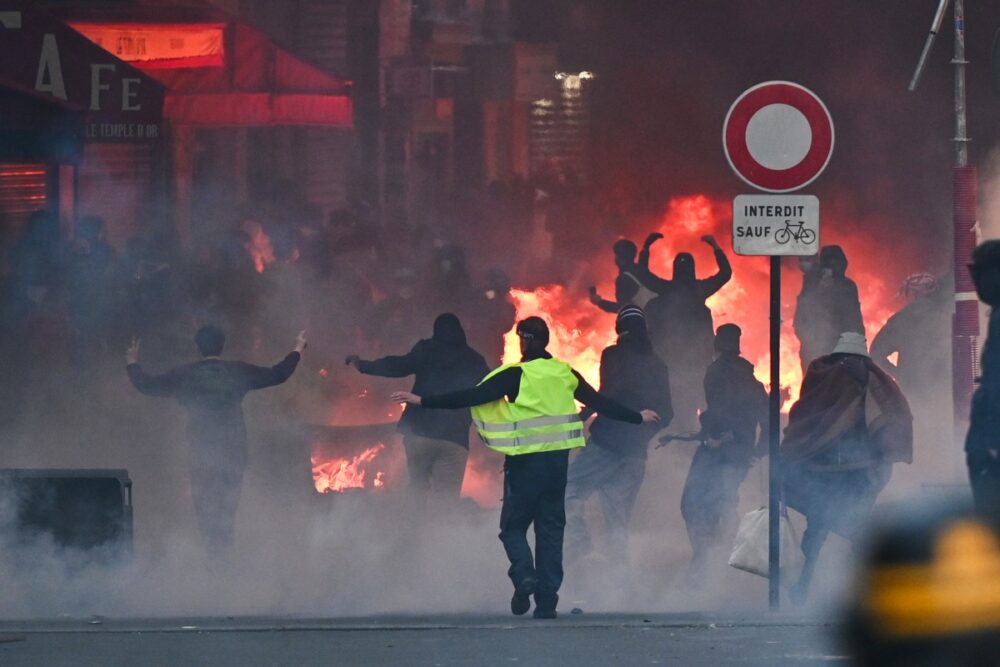
Regarding the scope of this inquiry commission, it is expected to examine, among other things, “the way public authorities prepare in advance for such events” but also “the intelligence and the means at their disposal”, while the executive acknowledged failings in anticipating the scale of the October 17 demonstrations.
What hearings?
“The level of information given to mayors by the prefectures” would be questioned, as would “potential foreign interference,” “the influence of social networks,” and the “organization” of those responsible for violence.
Moreover, the public-order mechanism and its “possible dysfunctions” are in the lawmakers’ sights, as is the “appropriateness of the criminal response.”
A final point that puzzled deputy Sacha Houlié (Place Publique), given the separation of powers between the legislative and judicial branches.
Like other left-wing deputies, Elsa Faucillon (PCF) called for including “the high school movement that preceded October 17” and the executive’s handling of it within the scope of the work.
In front of the press, La France insoumise member Ugo Bernalicis urged a broad list of hearings. He named, among others, prefects, mayors, civil society representatives, and government officials.
Also, for instance, the “national director of territorial intelligence,” following Mediapart’s publication alleging that the government asked intelligence services to implicate LFI in weekend violence.
The schedule for wrapping up the work will also be a central topic. While a target of concluding by the end of December was floated, left-wing deputies asked to go further if necessary, noting that Parliament would close at the end of February for the presidential election.