
The archipelago’s extremely small and fragile economy depends on a government fiduciary fund: the interest generated by overseas investments is reinjected into the national budget to finance public spending, including the escalating costs of the climate crisis that the archipelago is facing.
An AFP investigation in May revealed that the manager of Tuvalu’s principal financial asset, Mercer’s Australian arm, had invested in funds holding stakes in major coal, gas, and oil companies. Fossil fuels are the primary drivers of climate change, an existential threat to Tuvalu.
And the archipelago’s room for maneuver regarding these investments is narrow, according to new documents obtained by AFP in September.
Because the fiduciary fund is modest in size on a global scale, Tuvalu has “limited ability to define specific investment preferences,” according to a briefing note from New Zealand’s Ministry of Foreign Affairs.
New Zealand sits with Australia and Tuvalu on the fund’s board of around $200 million, created in 1987. Mercer took over management in 2022.
Tuvalu’s money has been invested in funds offering broad exposure to dozens of companies, including potential “large greenhouse gas emitters,” Wellington notes.
Analyzing 14 Mercer funds held by Tuvalu, AFP had, in May, highlighted stakes in Indian conglomerate Reliance Industries, owner of the world’s largest crude oil refinery, and in The Southern Company, one of the United States’ largest greenhouse gas emitters.
These investments do “not look good for Tuvalu” in light of the “heavy lobbying work we are doing to combat climate change,” had said in June Prime Minister Feleti Teo.
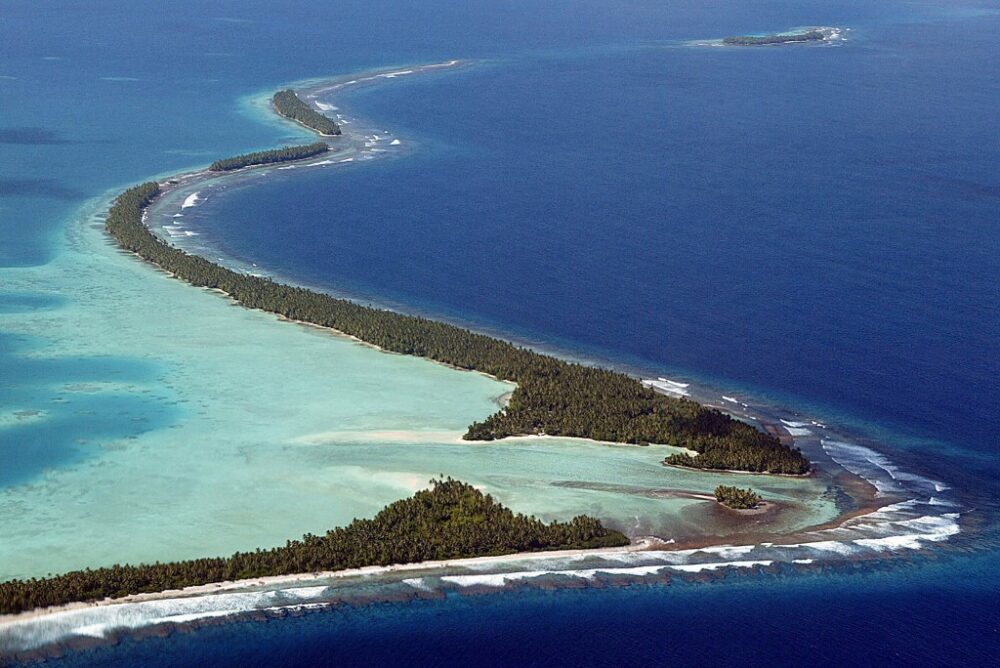
Midway between Australia and Hawaii, Tuvalu comprises low-lying atolls particularly vulnerable to climate change, facing ocean acidification, tropical diseases, and rising seas.
The small country of 10,000 people is calling for urgent international climate action and has recently hosted meetings in the run-up to COP 31.